
Judge Art with Error Bars
I aim to solve the big philosophical questions with this Substack blog newsletter whatever this is. And so I ask: are some works of art better than others, or is it all subjective? The way I see it, both stances have a reductio ad absurdum problem.
If you say some works of art are better than others, you risk having to rank everything on a single line from zero to a hundred: “Let’s see—Gulliver’s Travels is a 93.8886, The Bluest Eye is a 93.8887, and The Flowers of Evil is a 93.8888. Good, good. What are we giving a 93.8889?” This seems silly.
But if you say it’s all subjective, you have to bite the bullet and claim “Claire de lune” by Debussy is no better than “Toxic” by Britney Spears And you know what? Even if you think that’s true because you don’t want to bump “Claire de lune” in the club Friday night, you still have to bite the bullet and claim “Toxic” is no better than “I’m Not a Girl, Not Yet a Woman,” and that is a bridge too far.
Luckily, I’ve solved the whole problem.
In the sciences, if you’re plotting temperature over time, you might make a graph that looks like this:
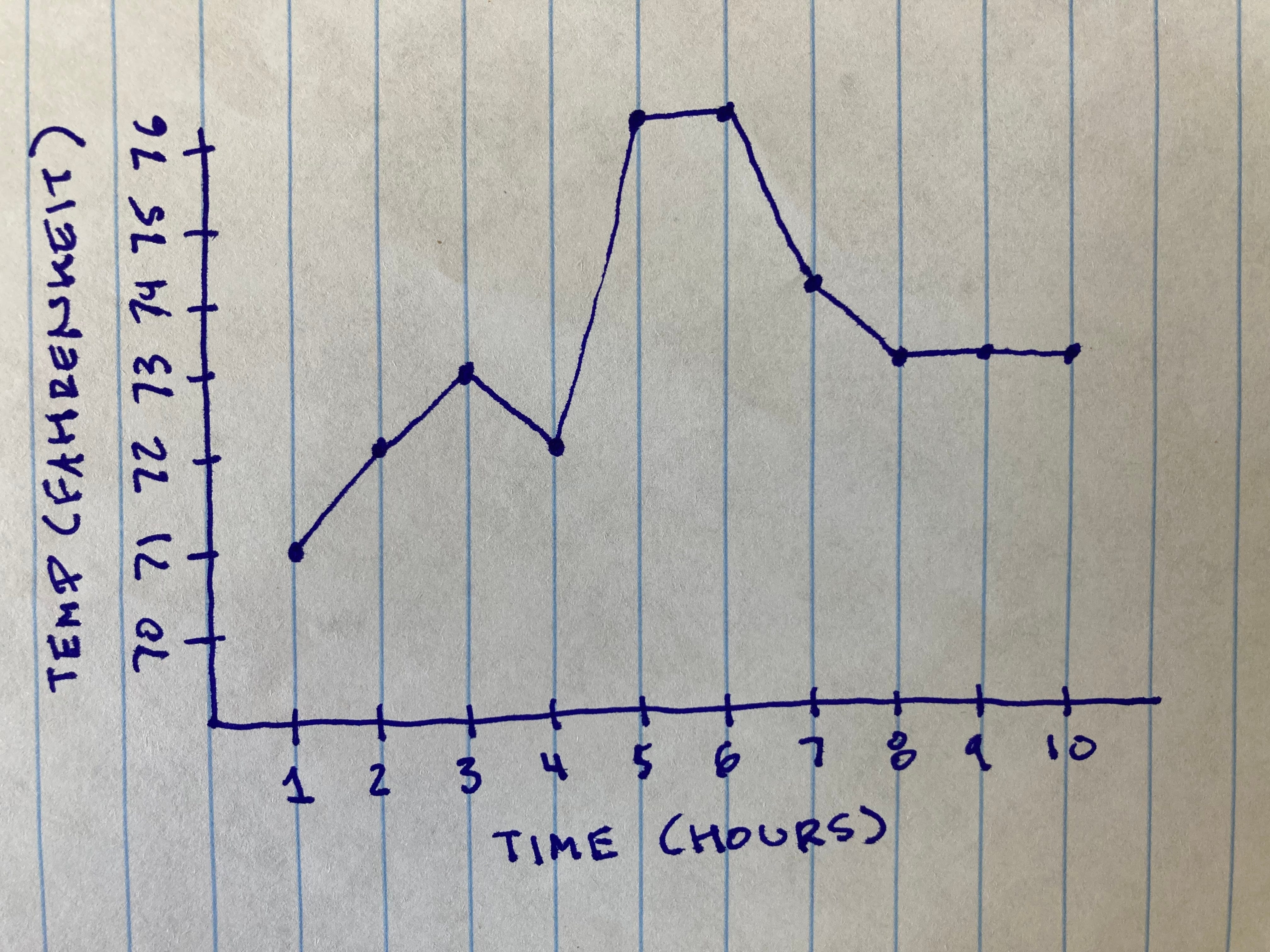
But if for some reason you were unsure of the exact temperatures, you might use error bars to make a graph that looks like this:
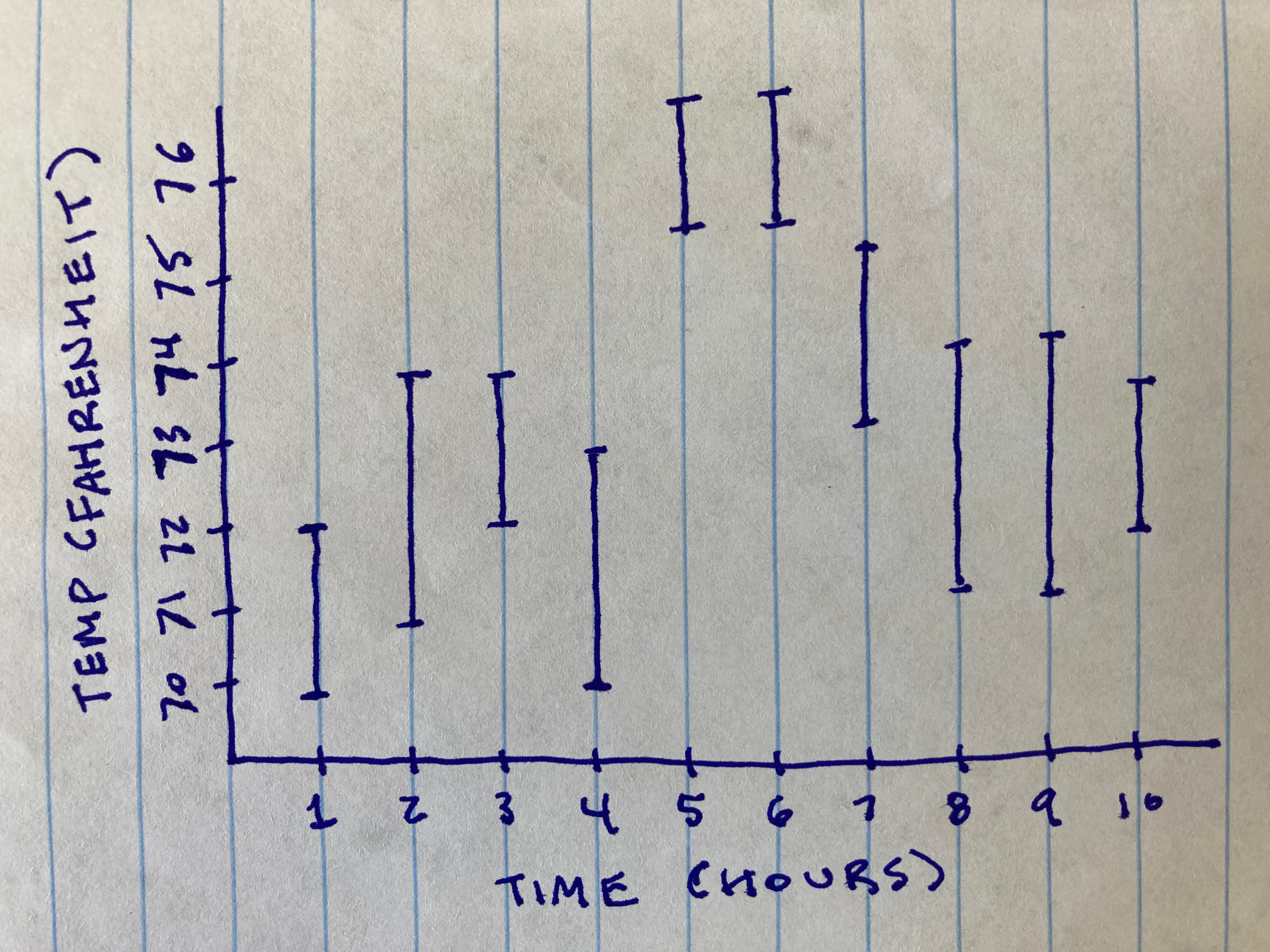
Which brings us to the title: judge art with error bars.
Instead of giving Hamlet a 100, give it a 98-100. Instead of giving The Canterbury Tales a 99, give it a 97-100. Instead of giving Twilight a 13, give it a 10-20. In this schema, the Shakespeare lovers and the Chaucer lovers can agree to disagree: I can rank Hamlet a 100 and The Canterbury Tales a 99, and you can do the opposite.
But, at the same time, no one has to contend Stephenie Meyer is anywhere near their level. And hey, maybe you have a thing for sparkly vampires and want to rate Twilight a 20, while I’ve grown particularly tired of the “cute clumsy girl” trope and want to rate it a 10. Again, we can disagree while sharing common ground.
This system is most useful when ranking experimental, polarizing art. I gave Hamlet a two-point spread because there’s a large consensus on its quality, but Finnegans Wake could run from 10-90 to encompass both those who think it’s a bad joke and those who find it transcendent. A few years ago there was a kerfuffle when Sight and Sound named Jeanne Dielman, 23 quai du Commerce, 1080 Bruxelles the greatest film of all time. Perhaps they could have avoided the (inevitable, desired) backlash if they had simply extended the film’s error bar up to 100 without displacing Vertigo.
I was struggling to end this essay when The Guardian released “The 100 Best Novels of All Time.” Their top picks, counting down, were Madame Bovary, Pride and Prejudice, Jane Eyre, War and Peace, Anna Karenina, In Search of Lost Time, To the Lighthouse, Ulysses, Beloved, and Middlemarch. And, yeah, those are all good books…but…just…what the fuck are we doing here? I get that The Guardian is a rag, and that people love lists, and that newspapers are hemorrhaging money, but really, what the fuck are we doing?
Every time one of these rankings comes out, there’s a bunch of hemming and hawing by the authors—“This is just for fun! People love to argue! Leave a comment if you disagree!”—and it makes me think of my favorite Kurt Vonnegut quote:
We are what we pretend to be, so we must be careful about what we pretend to be.
Just stop it. Art is not a track and field event. There is no first place. It is inane to say Don Quixote is no better than Twilight, but it is equally inane to say Don Quixote is ever-so-slightly better than The Trial and ever-so-slightly worse than Lolita. Judge art with error bars. We are what we pretend to be. Quit pretending to be something so stupid.
This is fantastic. Short, sharp, and shiny.
Dude, you stole my blog post idea lol. I was going to write about this exact concept. Damn you.